

Blog
What are the best Japanese knives?
February 03, 2023

Are you an avid cook? If the answer is yes, then you've probably already heard about the quality of Japanese knives! But is there a better knife than the others? Can we choose any Japanese knife? These questions are answered in this article.
Why choose a Japanese knife?
Japanese knives, known for their finesse and precision, found their place in Western kitchens in the 1980s.
For most cooking tasks, there is a Japanese knife suited to the job, even for home cooks with limited experience.
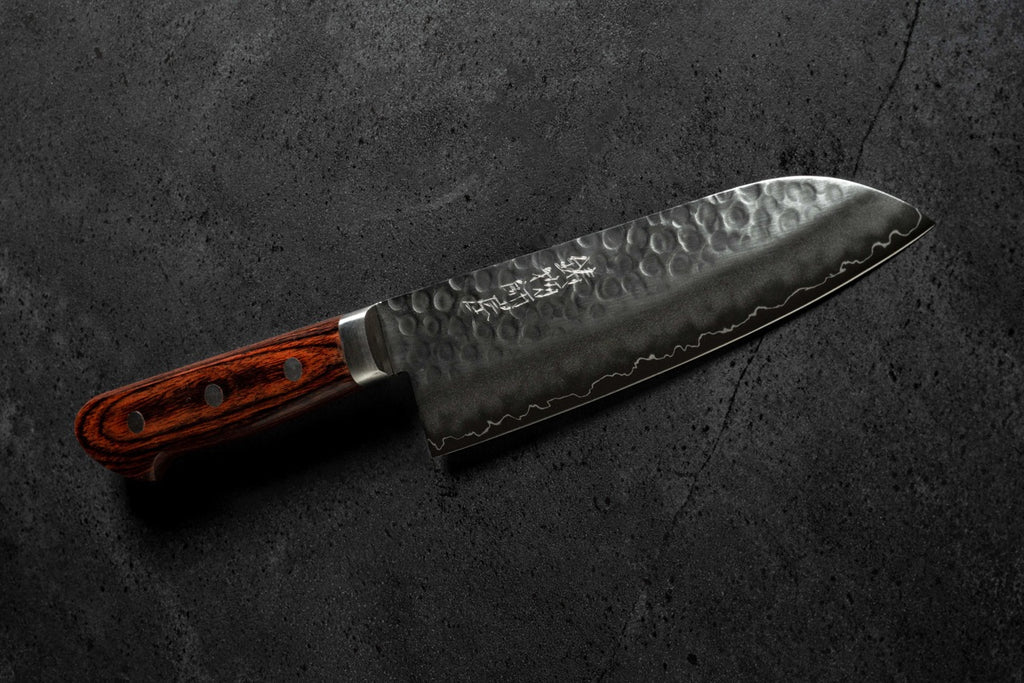
The Santoku knife: The traditional knife par excellence
Perfect for beginners, the Santoku is certainly one of the most versatile knives! Recognizable thanks to its characteristic shape, it allows you to slice, cut, and chop vegetables, meat, and fish with precision and control. Its exceptional handling allows you to make cutting movements in all directions (be careful, however, to avoid twisting movements), for a very precise result. It remains one of the best Japanese knives in terms of versatility, especially for newcomers exploring Japanese knife types.
Discover our collection of Santoku knives.
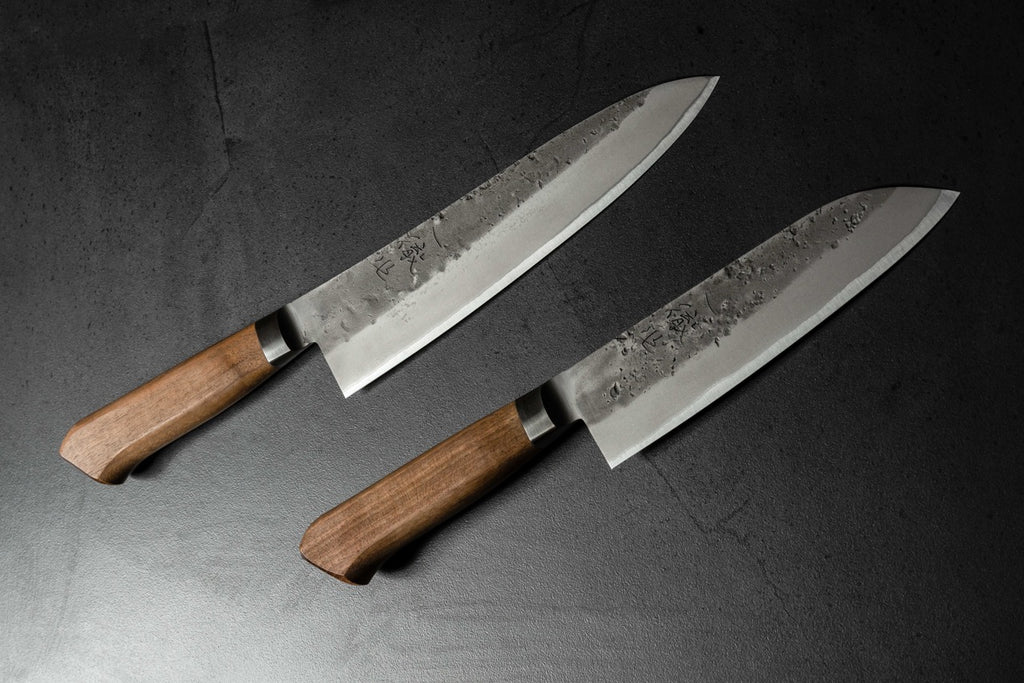
The Gyuto knife: the Japanese version of the chef's knife
Here is the future star of your kitchen: the Gyuto, which is similar to the Western chef's knife. This knife features a thinner, sharper blade profile designed for precise cutting tasks. Perfect for cutting pieces of meat or fish, you can also do precision tasks like finely chopping herbs. This versatility makes it well-suited for a wide range of everyday cooking applications. Gyuto knives from Japanese knife brands worth knowing are often part of the best Japanese knife set for beginners, making them a reliable choice for everyday cooking.
Discover our collection of Gyuto knives.

The Nakiri knife: for an exceptional julienne
You don't need a bunch of knives to cut vegetables or fruits; the Nakiri knife is the only one you really need! Recognized by its flat blade, you can slice thinly or practice the art of carving vegetables. It is also the knife you need to cut root vegetables or squash, which are sometimes difficult to slice with other types of knives. Even though it looks like a small cleaver, be careful not to use it to cut bones or hard foods.
Discover our collection of Nakiri knives.

The Yanagiba knife: wake up the sushi master in you
Who hasn't dreamed of becoming a true sushi master? With the right ingredients and a Yanagiba knife, it's (almost) within anyone's reach!
This knife has a long, thin, sharp blade that allows you to prepare sushi and sashimi in a single motion. It is also the perfect ally to slice fish with precision. Yanagiba knives are traditionally produced in longer blade lengths, which allow for smoother slicing motions when preparing fish. Its single-bevel design is iconic among traditional Japanese knives.
Discover our collection of Yanagiba knives.

The Petty knife: to become an ace of precision
The Petty is definitely a knife that should be in every kitchen. Thanks to its small size, this knife is often a good idea to gently familiarize yourself with the world of Japanese knives. Also known as a paring knife, it is very useful for peeling, cutting, and chiseling small foods. No matter what your recipes are, the Petty is sure to be useful in the preparation of your daily meals. Practical and versatile, it quickly becomes indispensable for daily tasks and is commonly included in the best Japanese knife set for beginners.
Discover our collection of Petty knives.
In short, there is a Japanese knife for all uses; you just have to choose the right one! The type of steel, the upkeep, and the weight are good criteria to take into consideration to find your ideal knife. For more information, read more on our FAQ.
Olivier's advice:
Selecting your first Japanese knife may indeed seem complicated. You just have to ask yourself some questions about your cooking habits. What kind of food do I cut, what kind of dishes do I cook regularly? What kind of maintenance am I looking for? A stainless knife? The least amount of maintenance possible? Carbon steel, more durable and traditional? Each knife is unique, just like us! Don't hesitate if you have any questions; our team of experts will be happy to help you!