en
Canada CAD
Skip to product information
Shirogami #1

Purest carbon steel: the sharpest edge, needs attentive care.

Gyuto

Japanese chef's knife: all-round for vegetables, meat and fish.

240 mm

Long: big boards, large vegetables, pro or enthusiast use.

Brand: Jiro
Blacksmith: Jiro Nakagawa 次郎
Production area: Nagano/Japan
Profile: Gyuto
Size: 240mm
Steel Type: Carbon Steel (Oxidizable)
Steel: Yasuki White (Shirogami) #1, soft iron plated
Handle: Taihei Tagayasan and octagonal buffalo horn ferrule
Total length: 400 mm
Edge length: 242 mm
Length from handle to tip: 257 mm
Blade height: 57 mm
Thickness: 7mm
Handle length: 144 mm
Weight: 272g
Hand orientation: ambidextrous
Date of manufacture: October 2021
*AVAILABLE IN STORE ONLY

Blacksmith Jiro

Jiro-san is a blacksmith and knife maker from the Nagano region. He makes these knives from A to Z alone, meaning that every part of the knife was handcrafted by Jiro-san from start to finish. For those who don't realize the magnitude of his work, the quantity of blades that can be produced by a good quality Japanese industrial manufacturer can reach 10,000 per year. As for Jiro, he has a maximum capacity of about twenty knives per month! This is why the number of knives on the market is limited.

He's been a blacksmith for 20 years, but no one has noticed how incredible his work is. When he was discovered by Hokuto Aizawa (Hitohira's president), it was surprising that no one had found him yet.

Each knife comes with handwritten paper noting the serial number, profile, steel type, handle type, size, and date of manufacture.

By Jiro

Jiro Tsuchime Wa Gyuto 240mm Taihei Tagayasan (#306)

Longueur Icon

Size

240mm

Longueur Icon

Overall length

400mm

Longueur Icon

Blade height

57mm

Longueur Icon

Handle to tip length

257mm

Longueur Icon

Thickness

7.0mm

Longueur Icon

Edge length

242mm

Longueur Icon

Weight

272 g

Longueur Icon

Handle length

144mm

Longueur Icon

Steel

Yasuki White (Shirogami) #1, soft iron plated

Longueur Icon

Steel Type

Carbon steel (oxidizable)

Longueur Icon

Profile

Jiro Nakagawa

Longueur Icon

Usage

Chef knife

Longueur Icon

Hand Orientation

Ambidextrous

Longueur Icon

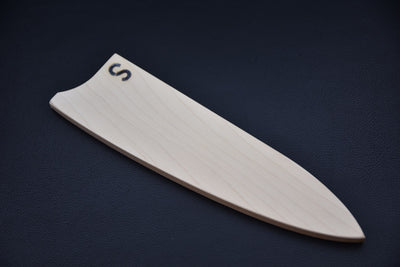
Saya

Not Included

Longueur Icon

Production

Nagano/Japan

Regular price $920.00
Sold out
Shipping scheduled for
FREE Shipping CA 150$+
Store availability
Montréal: Out of stock
Québec: Out of stock

*Transfer available between stores, contact us at

Care bundle

Description
Shirogami #1

Purest carbon steel: the sharpest edge, needs attentive care.

Gyuto

Japanese chef's knife: all-round for vegetables, meat and fish.

240 mm

Long: big boards, large vegetables, pro or enthusiast use.

Brand: Jiro
Blacksmith: Jiro Nakagawa 次郎
Production area: Nagano/Japan
Profile: Gyuto
Size: 240mm
Steel Type: Carbon Steel (Oxidizable)
Steel: Yasuki White (Shirogami) #1, soft iron plated
Handle: Taihei Tagayasan and octagonal buffalo horn ferrule
Total length: 400 mm
Edge length: 242 mm
Length from handle to tip: 257 mm
Blade height: 57 mm
Thickness: 7mm
Handle length: 144 mm
Weight: 272g
Hand orientation: ambidextrous
Date of manufacture: October 2021
*AVAILABLE IN STORE ONLY

Blacksmith Jiro

Jiro-san is a blacksmith and knife maker from the Nagano region. He makes these knives from A to Z alone, meaning that every part of the knife was handcrafted by Jiro-san from start to finish. For those who don't realize the magnitude of his work, the quantity of blades that can be produced by a good quality Japanese industrial manufacturer can reach 10,000 per year. As for Jiro, he has a maximum capacity of about twenty knives per month! This is why the number of knives on the market is limited.

He's been a blacksmith for 20 years, but no one has noticed how incredible his work is. When he was discovered by Hokuto Aizawa (Hitohira's president), it was surprising that no one had found him yet.

Each knife comes with handwritten paper noting the serial number, profile, steel type, handle type, size, and date of manufacture.

Care instructions

Have professionally sharpened on a water stone every year. Store in a dry place. Wash immediately after use and dry completely before storing. Do not soak. Not dishwasher safe.

Product Remarks

Please note that each handle is unique and may exhibit distinct variations, such as differences in the hue or color of the buffalo horn, which is part of its authentic, handcrafted character.

Warranty

Each knife is covered by a lifetime guarantee against obvious manufacturing defects. For example, if the handle comes loose or cracks after a few weeks of proper use, or if the blade develops a crack along the edge or blade spine. These issues are rare, but they can occur. In such cases, we will offer you an exchange for the same product or a refund. As every case is different, it is at our discretion to assess whether our lifetime guarantee against obvious manufacturing defects applies.

After-Sales Service

Is your knife not cutting as well as you expected? Each knife comes with what we call its "original sharpening". We have over 200 different products in stock, often several of each. All our products are handcrafted in Japan before being shipped, and the "original sharpening" may vary. If you think your knife is not cutting to its full potential, do not hesitate to contact us and we will sort it out for you by sharpening the knife free of charge!

Oops, did an accident happen with your blade?

Did your knife fall on the floor, get damaged during a slip, or was it used to cut something too hard? We’ll take care of it and support both you and your knife by offering you an in-store sharpening and repair service!

Do not hesitate to contact us or stop by the store to get an estimate in just a few minutes!

Shipping and Returns

What are your shipping rates?

Canada: $15 (free for orders over $150)
United States: $20
Rest of the world: $50


What are the delivery times?

We do our best to process your order within 72 business hours (weekends excluded) in order to ship your package as quickly as possible. Delivery times vary depending on the carrier. If you need faster delivery, please contact us at 514-503-1185.


Is there a refund policy?

No refunds are accepted.
The only exception concerns defective items (although our team checks every order with the utmost care). If you receive an item that appears to be defective, please notify us as soon as possible after receipt. In the event of damage caused by the carrier, please keep all items and original packaging for a possible inspection by the carrier. Items returned to Stay Sharp are at the buyer's expense. Items must be properly packaged to prevent any damage and must be fully insured. Please also provide us with the tracking number so that we can monitor the status of the shipment. Funds will not be refunded until we have received the items and confirmed that their condition is satisfactory. The refunded amount will correspond to the amount paid, less shipping and handling fees, online sales fees and any other costs incurred.

Customer Reviews

ACCESSORIES RECOMMENDED BY OUR EXPERTS

INTRODUCTION TO THE GYUTO


The Gyuto, also known as the "牛刀" in Japanese, is a versatile knife that literally translates to "beef sword". It is considered the equivalent of the Western chef's knife and is specially designed to perform all kinds of cutting tasks, whether for vegetables, meats, or fish. Featuring a sharp blade and a sturdy construction, the Gyuto is an essential tool for any professional or amateur cook who cares about the precision and quality of their cuts.

USAGE TECHNIQUES

The Gyuto is designed to be used with various techniques, notably the "push-cut" method and the rocking method. The "push-cut" method involves slightly lifting the blade between each cutting stroke, which helps maintain control and precision when cutting food. This technique is particularly useful for making clean, uniform cuts, enhancing the flavor of the food and ensuring an attractive presentation of the dishes.
Another method commonly used with the Gyuto is the rocking technique. This method involves rocking the knife back and forth while keeping the tip of the blade in contact with the cutting board. This technique allows for quick, fluid cuts, ideal for cutting tasks that require speed.

CARE AND MATERIALS

When using the Gyuto, it is crucial to ensure that the blade is perfectly straight at the moment of impact with the cutting board. This helps prevent damage to the knife's edge, ensuring a precise and uniform cut while preserving the blade's durability. An incorrect impact angle can lead to blade damage and affect the quality of the cuts.
The Gyuto blade is made of high-quality Japanese steel, giving it exceptional sharpness and great wear resistance. The steels used in the manufacturing of Gyutos are heat-treated to high levels, allowing them to maintain their sharpness for a longer period compared to other types of knives.
To extend the life of the Gyuto and maintain its sharpness, we recommend sharpening it regularly with a quality ceramic sharpener or using the leather strop. As for sharpening on a whetstone, we recommend doing so once or twice a year for non-professional use. Sharpening on a whetstone must be done with care and precision, respecting the blade angle and following the appropriate techniques. If you wish, we can take care of it via our expert sharpening service. If your Gyuto is made of carbon steel, it is essential to take care to clean and dry the blade properly after each use, in order to prevent the formation of rust and other moisture-related damage. In the event that your knife is made of stainless steel, we still advise you to take care of it and not put it in the dishwasher, for example.

ORIGIN, SIZES AND CONCLUSION

The Origin of the Gyuto The Gyuto, a versatile and highly regarded chef's knife, originated in Japan during the Edo period, which spanned the 17th to 19th centuries. This iconic knife has its roots in Japanese blade-making traditions dating back to this historical era. During the Edo period, Japanese artisans perfected the art of forging blades using sophisticated techniques and working with high-quality materials. They developed unique skills to create sharp, durable blades that met the demands of the chefs of the time. It was in this context that the Gyuto emerged as the Japanese equivalent of the Western chef's knife, with its own distinct characteristics and design philosophy. Today, the Gyuto continues to embody the heritage of Japanese craftsmanship and is recognized worldwide for its exceptional quality and performance in the kitchen. The Different Sizes of Gyuto Gyutos are available in a variety of sizes to meet the specific needs of chefs and cooks. The most common sizes include 180 mm, 210 mm, 240 mm, and 270 mm. Each size offers unique advantages depending on the cutting tasks intended. 180 mm Gyutos are compact and manageable, perfect for delicate work and precise cuts. 210 mm knives offer an ideal balance between manageability and versatility, suitable for a wide range of cuts. 240 mm models are popular for their extra length, offering increased reach and improved cutting capacity. Finally, 270 mm Gyutos are the largest and offer maximum power and efficiency when cutting large pieces of meat or fish. Regardless of the size chosen, Gyutos offer exceptional cutting performance for an optimal culinary experience. In Conclusion In conclusion, the Gyuto is a versatile Japanese chef's knife, featuring a sharp blade and sturdy construction. Its name, which literally means "beef sword," reflects its ability to perform all kinds of cutting tasks with precision and efficiency. Whether cutting vegetables, meats, or fish, the Gyuto is the ideal tool for expert chefs and passionate home cooks. Be sure to use proper cutting techniques, maintain the knife regularly, and give it the necessary care to enjoy optimal performance in the long term.

Frequently Asked Questions

Is this Jiro Gyuto suitable for left-handed users?

Yes. This Gyuto is designed for ambidextrous use: its Taihei Tagayasan handle and octagonal buffalo horn ferrule do not favor either hand. A left-handed person can therefore use it without any particular adjustment, just like a right-handed person. As with any 240 mm knife, keep the blade straight when it touches the board to protect the edge, and let the length of the blade do the work rather than forcing the cut.

How do I care for a carbon steel Gyuto like this one?

This Gyuto is classified as oxidizable: its carbon steel rusts quickly if it remains damp. Wipe the blade between cutting different foods, dry it before storing it, and avoid soaking it. The hammered finish creates small recesses where moisture can collect, so wipe the Tsuchime lines rather than just the flat surface. A patina will develop with use, which is normal. The Taihei Tagayasan handle is simply cleaned with a damp cloth, without immersion.

What does the handwritten paper delivered with this Gyuto contain?

Each of Jiro-san's knives comes with a handwritten document. It includes the piece's serial number, here #306, as well as the profile, the steel used, the handle, the blade length, and the date the knife was completed. This paper allows the specific piece to be identified and its history to be documented. For a Gyuto made from start to finish by a single artisan, it serves as a kind of identity card.

How did Jiro Nakagawa get noticed?

Jiro-san had been forging in the Nagano region for about twenty years without his work attracting any attention. It was Hokuto Aizawa, president of Hitohira, who discovered him, surprised that no distributor had spotted him before him. Since then, his knives have been offered in very small quantities, as Jiro-san continues to perform every step alone. This 240 mm Gyuto illustrates this discreet production, entirely crafted by a single blacksmith, from forging to handle assembly.

Why is Shirogami steel nicknamed “white paper” steel?

Shiro means white, and the name refers to the paper in which the maker historically wrapped this steel. This nickname does not refer to the color of the blade, nor to a quality superior or inferior to that of other carbon steels. Shirogami #1, used here, belongs to the white steel family, renowned for its very simple composition and its ability to take a very fine edge, which Jiro-san forges and hammers himself.

How is the Tsuchime hamon formed on this Gyuto?

Tsuchime marks are left by the hammer during the finishing of the blade. On this Gyuto, Jiro-san applies them himself, stroke after stroke, which explains why their distribution differs from one knife to another. This hammering adorns the blade with a visible relief and a texture that catches the light. It only requires a little attention when drying, as moisture can settle in the hollows of the carbon steel and cause small spots.

Drawer Title
Similar Products